Tuesday, 17 November 2015

How does one stop empathising with a serial killer?

What issues am I facing with Ted Bundy's story? Surprisingly a lot of personal and emotional ones! Although there are issues with the research and writing process, it's becoming extremely difficult to isolate myself from the story the further I delve into the life of Ted Bundy.

Excusing Bundy's behaviour/empathising with him

My research has uncovered truths about the childhood of Ted Bundy and his upbringing that unintentionally provoked empathy throughout this process. Such research uncovered the abandonment of a new born Ted by his mother, the violent bully that was his grandfather and the macabre thoughts of a little boy.

Without intending to, I appear to have gained a slight empathetic view on this childhood tale.  Reading about the lies that surrounded Bundy's family home, I can't help but sympathise with the poor boy, regardless of the monster he grew up to become.

I am afraid that the deeper I dig and the more attached I grow to the little boy Bundy used to be, I will soon find myself excusing how he turned out. Not only through his troubled childhood, but by digging until I find more information that would let someone off for their actions. Of course this isn't at all what I wish for my creative piece of non-fiction and so I must try to follow the advice of Isabel Wilkerson and try to strike a balance between my narrative and the subject.

Unable to contact those involved
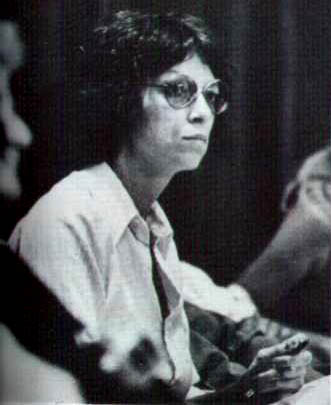


A practical issue that I know many other writers suffer from is the inability to contact the parties involved with the story. Whilst there are still people out there I could reach out to – for example, Bundy's ex-wife – it would take a great amount of time to locate them and even more to obtain their permission to drag up the past. Not only is time a factor but I would feel immoral bringing up the past when everyone involved has tried to rebuild their lives now.


It is without these contacts that I forced to rely on the interviews and research undertaken in the late 20th century; from newspapers to case files, my research will be through the discoveries others have already made.

Monday, 9 November 2015

The Killer vs. The Story

Whilst planning on how to tell the story of Ted Bundy and the poor women who fell victim to his evil, it was imperative to research what had already been done. As mentioned in last week's post, two books were purchased that were based on Bundy and his crimes.

Unfortunately, the one disadvantage I have in contrast to these novels is that the authors had personal links with Bundy. I do not. Just like Kate Summerscale in The Suspicions of Mr Whicher, I am having to rely on what my research uncovers and the second hand accounts of those involved to tell the story.

But how am I going to tell the story?

Idea #1: focus on what made Bundy the killer he gave his life to be:

- The relationships between Bundy and the closest relatives in his life and how their constant changing shaped the man he grew to become

- The romantic entanglement that acted as the 'guidelines' Bundy used when looking for his next victims

- How society treated Bundy (the illegitimate child of a young Christian) in both his childhood and adulthood


Idea #2: tell the stories of the victims: 

- Who the young women who Bundy viciously murdered were

- Why are only some of them remembered over others when they were all just as important?

- The lives of the families who lost daughters by Bundy's hand and how they've coped throughout the trials and execution


Idea #3: similar to the styling of Summerscale:

- A chance to take a deeper look into the many cases made against Bundy; from being accused of smoking marijuana to murder

- Frame the entire story with official documents and case reports in a similar style to that of Kate Summerscale


Idea #4: the present:

- Look into similar cases that could have been influenced by the crimes of Ted Bundy

- The lives being led by Bundy's ex-wife and his daughter who was conceived on Death Row

- Find out what happened to the women who barely escaped Bundy's clutches

Monday, 2 November 2015

Two sides of the same killer

Gone are the days of concealing evidence from the public. With a few simple searches online, I managed to uncover a number of files from the Federal Bureau of Investigation (FBI), all of which are accessible to anyone with an internet connection. If I, a curious student with no intention of following in Bundy's shadow, can gain access to government files describing his crimes, then what's to stop budding serial killers also discovering these files?

And who's to say that they, like me, will only be saving these files for studies? There's nothing to stop budding serial killers taking tips for their own crimes.

Across the internet there are numerous copies of the original FBI paperwork from their records in regards to the first apprehension of Ted Bundy. Unfortunately, he escaped police custody during his trial so the files regarding his crimes don't stop there.

As well as the files taken from the FBI archives, there are additional court documents and video footage of Bundy's first trial in Utah. Such documents include the capital case appeal and the extensive case of 'Ted Bundy vs. the Supreme Court of Florida.'

Additionally, a number of creative outlets based around Bundy can to light this week. Two books in particular include Ted Bundy: Conversations with a Killer – a documentation of the killer's last interviews – and The Stranger Beside Me – a true story about the life of Bundy told from an alias who knew the serial killer personally. Both books are on order which will only open this blog to a deeper insight to the mind and life of this psychopath upon their arrival.

There are also films with major stars in, all which focus on Bundy rather than the victims; such films include Ted Bundy and The Deliberate Stranger. Bundy's last interview and trial are also available to watch on YouTube. Whilst the interview shows Bundy finding blame on the pornography industry for his murderous ways, the trial shows how calm and collected he was whilst undergoing a trial for murder.

Two sides of the same killer; both telling different stories about the same psychopath from the perspective of the man himself.